Showing posts with label Health. Show all posts

September 09, 2019

Animator's Guide to Health and Wellness - Part 4: Food & Sleep

Foods That Boost Productivity
Many foods can help keep your brain healthy and alert.

Some foods, such as the fruits and vegetables in this list, as well as tea and coffee, have antioxidants that help protect your brain from damage.

Others, such as nuts and eggs, contain nutrients that support memory and brain development.

You can help support your brain health and boost your alertness, memory and mood by strategically including these foods in your diet. Certain foods you eat play a role in keeping your brain healthy and can improve specific mental tasks, such as memory and concentration, here’s the list:
Eggs
Fish
Oranges
Blueberries
Broccoli
Avocados
Nuts
Pumpkin Seeds
Green Tea
Whole Grains
Turmeric
For fish, we’re talking non-processed foods, these are the Omega oils, the fatty fish like salmon, mackerel, tuna, and herring. For whole grains we’re talking brown rice, barley, bulgur wheat, oatmeal, whole-grain bread, whole-grain pasta. For specifics on nuts and seeds; almonds, cashews, peanuts, flaxseed and chia seeds. Turmeric improves memory, boosts serotonin and dopamine, which both improve mood, and helps new brain cells grow. To reap the benefits of turmeric, try cooking with curry powder, adding it to potato dishes to turn them a nice golden color or try making turmeric tea. Kale, Dark Chocolate, and Coffee are also known to help brain function.

Try to work in most of these foods into your system every week. Some teas have caffeine in them, so just like coffee, try to have those in the morning to help wake you up, and that way it won’t interfere with your sleep that evening.

Sleep Quality

A good night’s rest is very, very important. 6+ hours of quality (uninterrupted) sleep will help greatly with your daytime productivity. Here's some tips on how to get that good night's rest.

Adopting new habits to help you sleep:
• Stick to a regular sleep schedule. Support your biological clock by going to bed and getting up at the same time every day, including weekends.
• Avoid naps. Napping during the day can make it more difficult to sleep at night. If you feel like you have to take a nap, limit it to 30 minutes before 3 p.m. If it's the weekend (or a day off), take all the naps you'd like, knowing you'll be going to be later anyways.
• Limit caffeine. Stop drinking caffeinated beverages at least eight hours before bed. While alcohol can make you feel sleepy, it interferes with the quality of your sleep, nicotine is a stimulant, and caffeine stays in your blood for 8 hrs. 
• Avoid late meals. Try to avoid heavy, rich foods within two hours of bed. Fatty foods can take a lot of work for your stomach to digest and spicy or acidic foods can cause heartburn. It's hard to do this, because most people love a snack just before bed, but it can get your metabolism going and keep you awake. 
• Get regular exercise. Regular exercise can improve the symptoms of insomnia, but it’s not a quick fix. It takes several months to feel the full effects. Aim for 30 minutes of activity 3 to 4 times per week—but not too close to bedtime. Add more exercise time when you can work it in and as your body gets used to it, you energy level will go up and sleep quality will improve.
Develop a better bedtime routine - It’s not just what you do during the day that affects the quality of your sleep, but also those things you do to prepare your mind and body for sleep:
• Make sure your bedroom is quiet, dark, and cool. Noise, light, and heat can interfere with sleep. Try using a sound machine or earplugs to hide outside noise, an open window or fan to keep the room cool, and blackout curtains or a sleep mask to block out light. 
• Avoid stimulating activity and stressful situations before bedtime. This includes vigorous exercise, big discussions or arguments, or catching up on work. Instead, focus on quiet, soothing activities, such as reading, knitting, or listening to soft music, while keeping lights low. 
• Turn off screens one hour before bedtime. The light emitted from TV, tablets, smartphones, and computers suppresses your body’s production of melatonin and can severely disrupt your sleep. Instead of emailing, texting, watching TV, or playing video games, try listening to a book on tape, a podcast, or reading by a soft light. 

Natural Sleep Aids
In the supplements/vitamins section at your local grocery store you can find these things to take a few an hour before sleep:
• Valerian is an herbal extract. It is one of the leading natural supplements for managing anxiety and insomnia. Some limited findings show that valerian may reduce the time needed to fall asleep and may improve sleep quality. 
• Drink Tart Cherry Juice. A ½ cup to a 1 cup of tart cherry juice is a tasty way to drift off to sleep, and is a natural sleep aid that I personally think really helps. Tart cherry juice is a natural sleep aid because it’s full of tryptophan. Tryptophan is an essential amino acid that coverts to serotonin, which then coverts to melatonin. Melatonin helps maintain our sleep and wake cycle by causing drowsiness and lowers body temperature, working with the central nervous system to sync our biological clock. Its production is inhibited by light, but released in low light/darkness. 
• Get More Melatonin. This chemical is oh-so-important to sleep, but our body needs outside sources to get it. While it can be taken as a natural supplement in pill form, here are some foods that will help boost production: Pineapples, Bananas, Oranges, Oats, Sweet corn, Rice, Tomatoes, and Cherries.
There’s nothing like a nice cup of tea to help you unwind. Particularly, one of these five relaxing blends, you can 'sleepy teas' in any specialty tea shop:
1) Seaberry Spa
White tea, ginger, lemon balm, rosemary, raspberry leaves, sea buckthorn, chamomile, sandy everlasting flower.
2) Mother’s Little Helper
Peppermint, lemongrass, hibiscus, rosehips, chamomile, valerian root, cornflowers.
3) Serenity Now
Currants, rosehips, lavender, spearmint, blueberries, quince, apple, hibiscus, rose petals, strawberries. With natural rose water and strawberry flavouring.
4) The Big Chill
Apple, lemon balm, silver lime flowers, apple mint, mango, lemon myrtle, peppermint, apricot, valerian root, sunflower.
5) Organic Dream On
Lemongrass, chamomile, hibiscus, licorice root, lemon peel, orange peel, lemon myrtle, fennel seeds, rose petals.
....and one last thing is Magnesium.
You can get it in powder from at the Bulk Barn, it comes in a white cylinder jar, it's completely natural, you put a scoop of it in your mug, then slowly pour hot water in the mug, watch it fizz up, stir it, and drink it a half-hour before bedtime.

Here's Jaiden Animations' hilarious take on health and fitness for artists:


Sometimes to meet deadlines a very late night or even an all-nighter is inevitable, here's ways to cope:

July 24, 2017

Animator's Guide to Health and Wellness - Part 3: Corrective Exercises for Forward Head Posture


See more...

Animator's Guide to Health and Wellness: Part 1

Animator's Guide to Health and Wellness: Part 2

August 31, 2015

Animator's Guide to Health and Wellness - Part 2: Back Pain & Posture


Animators, visual effects artists, compositors, CG artists, digital painters, and all those who do long, long, long hours sitting at a desk using a pen tablet, your posture can suffer greatly if you're not conscious of your sitting position. You're looking into a monitor, hands on a keyboard, or gripping that Stylus Pen for large amounts of time while sitting at a computer, barely moving all day long, it can make your neck and back sore.

Here's a good little video for exercises to help with your back and posture.


Here are exercises for preventing tendinitis and carpal tunnel, and they apply very well for animators, VFX artists and CGI artists & technicians of all kinds doing long days of work gripping that stylus pen.


In this clip, the focus is on a few hand stretching exercises that are essential to every guitarist's warm-up routine, of course these stretches apply very well to animators as well. These types of exercises can really go a long way to keeping your hands healthy and in good condition.


Reminding animators and artists to sit up straight, pull their shoulders back, pull their necks straight usually isn't too effective or long-lasting. We all sit for long periods of time, deeply focused on our work, not thinking about our postures or the grip on the pen. Eventually we all slouch down, our heads and necks stick out in front of us, whether we work with a tablet-and-monitor, or looking down at an angle on a Cintiq or some other graphic monitor system, or down on a flat table using good 'ol paper and markers.

So the big thing is to take breaks, get up and walk around, because the main cause of your neck sticking out, your shoulders rolling in, your eyes getting dry & sore, and your back curving forward is from many, many hours of sitting motionless at your work station.

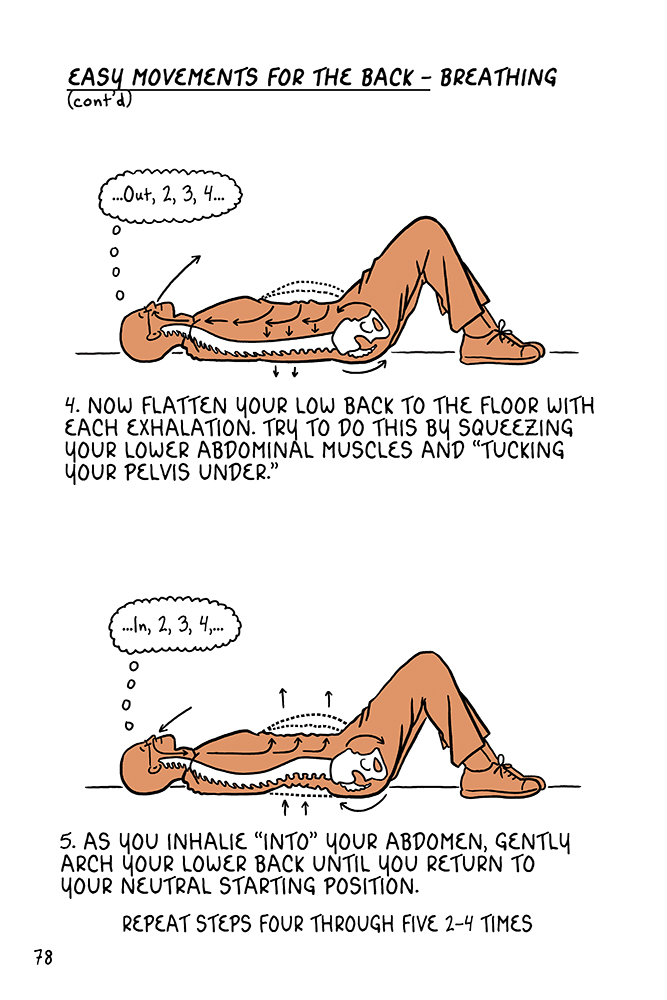
So get up and stretch your hands, arms and back, walk around, give your eyes  a rest, just for a few minutes, a couple times a day. Don't forget to do some of the exercises shown above, at a minimum of once every evening. It will help with blood circulation, prevent some strain on your back and neck, and help correct your spine from buckling.


From the book DRAW STRONGER:


See more...
Animator's Guide to Health and Wellness: Part 1

July 30, 2015

Animator's Guide to Health and Wellness - Part 1: Hands & Arms

Here are some tips on how to prevent soreness, pain and injury that can be caused from long days of sitting at your desk and animating for many, many hours. All tried, tested and true. Feel free to share for educational purposes. PDF version here.


I can't stress enough the importance of stretching your hands, and forearms every morning and every evening, spend 5-10 minutes going through a stretching routine. These are very easy to do, and takes little time to do them.

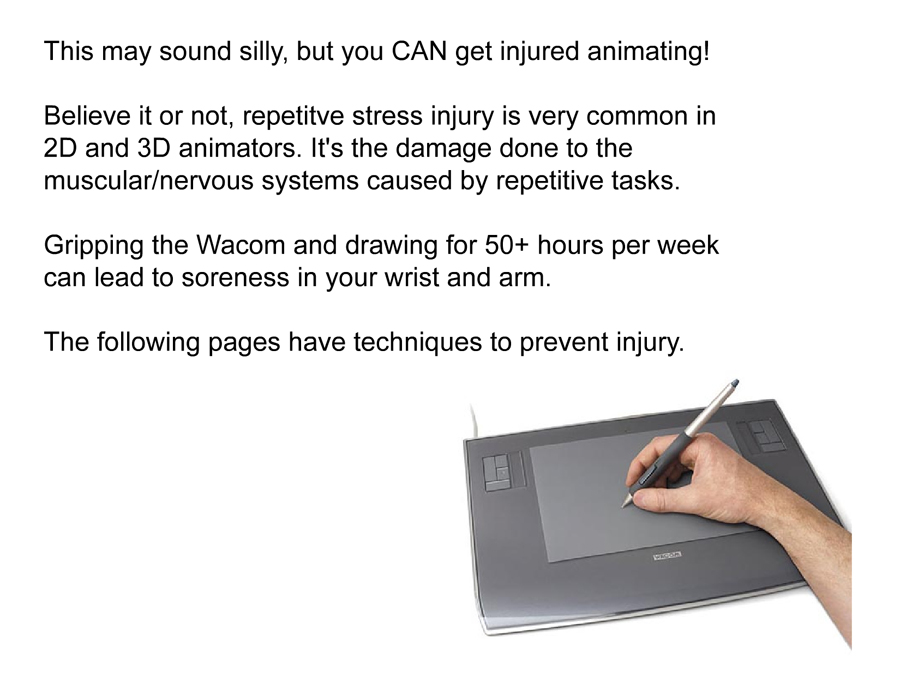
It's VERY common in all animation studios for soreness or mild injuries to gradually develop over time. The most typical one is Repetitive Strain Injury, it's a prevalent condition resulting from overusing the hands to perform a repetitive task, such as typing, clicking a mouse, writing, and of course drawing. In simple medical terms, repetitive strain injury (RSI) stems from prolonged repetitive, forceful, or awkward hand movements. The result is minor damage to muscles, tendons, and nerves of the neck, shoulder, forearm, and most commonly hand and wrist, which can cause pain, weakness, or numbness.

If you're feeling some pains, tingles, weakness, or numbness in the wrist/forearm; one of the best ways to heal quickly are 'Contrasting Baths'.

What crazy voodoo am I speaking of?
A couple different physiotherapists and massage therapists had recommended this technique to me several years ago, and for anyone I knew that tried it, they all say the results are fast and effective.

Commonly used by carpal tunnel suffers, it's a method of treating muscle soreness, swelling and inflammation, it's also known as 'Hot/Cold Immersion Therapy'.

You can use the double sink in your kitchen at home, if you don't have one, then get your hands on two very large identical bowls, it needs to be big enough to submerge your entire forearms from wrist to elbow.

Fill one up with ice cold water, with a few dozen ice cubes floating in there (something to prepare in your freezer the night before). The other with very warm water, not tea-kettle boiling hot water, just hot tap water, or as warm as you can handle, no sense in burning yourself of course.

Have a stop watch or clock ready, and submerge your arms for 30 seconds in the hot, then switch to doing 30 sec. in the cold, and repeat a few times back and forth, 30 seconds a piece. After only a few times you'll notice the hot water getting cooler and the cold water getting warmer, so then the technique grows to be less effective, but by then, the job is done.


The idea is that the extreme heat and cold contracts and expands your blood vessels, promoting greater blood flow to circulate and flush through your arms, and increased blood flow is what aids in healing the soreness much faster.


Enjoy!